When most people think about publishing books, their minds become flooded with misconceptions. They often think solely of the traditional route: finding a literary agent, landing a book deal, and seeing their name on a beautifully bound hardcover.
But today, the world of publishing offers far more options.
Traditional publishing, self-publishing, and hybrid publishing each have their pros and cons, and understanding these differences is the first step toward making the right decision for your book.
Let’s talk about the advantages (and disadvantages) of each of the three types of publishers.
Traditional Publishing
Traditional publishing is what most people imagine when they think of “getting published.” It’s the classic route: a reputable publisher, national distribution for your book, and the cachet of having a professionally produced title. Here are the pros and cons of going traditional:
Pros:
- Professional quality: Traditional publishers have the best presses, editors, and designers. Your book will look—and feel—amazing.
- Bestseller eligibility: With national distribution, your book will qualify for lists like the New York Times, USA Today, or other national bestseller lists.
- Prestige: Securing a deal is a badge of honor. In today’s competitive landscape, it is a great accomplishment for a traditional publisher to see something in your work.
- Advance payments: Traditional publishers typically pay a significant upfront sum to the author, even before the book exists. This is where veteran authors can make their living.
Cons:
- Delayed Timing: The process to traditionally publish a book can be slow, with months—or even years—passing before your book can reach its readers.
- Loss of control: When you sign a traditional book deal, the publisher now owns the book. Sounds strange, doesn’t it? You no longer own your own book! This means that you might lose your say in the title, the cover art, or even the content within. The intellectual property belongs to the publisher.
- Limited flexibility: Making changes after signing a deal is often difficult, as publishers have final approval over many decisions.
Traditional publishing can be a wonderful path for the right author, but it’s not the only way to get your book published.
Self-Publishing
On the other end of the spectrum is self-publishing—the fastest, cheapest, and most autonomous route for publishing your book. The good news is, you retain full control over your intellectual property: the title, cover, content, all of it. This approach is often the best choice for first-time authors who want to get their book out quickly (and who are not a great prospect for traditional houses). Here are the pros and cons of self-publishing your book:
Pros:
- Complete creative control.
- Faster time-to-market.
- You keep all intellectual property rights.
Cons:
- Lower perceived quality, both in outward appearance and content within.
- Without national distribution, you are typically ineligible for national bestseller lists.
- You’re responsible for every detail: design, typesetting, marketing, and sales. That’s why they call it self-publishing!
Self-publishing is empowering, and it is oftentimes the only option for the first-time author. But it also comes with significant responsibility. You are, in many ways, the captain of your ship, and nobody else is coming to save you.
There is, however, a third type of publishing that provides the best of both worlds.
Hybrid Publishing
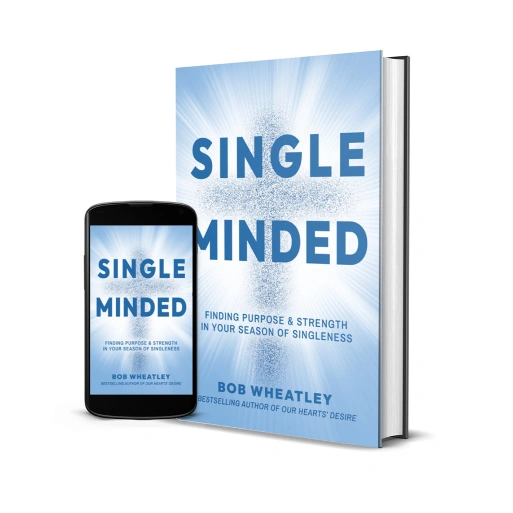
Both of my books, Single-Minded (2025) and Our Hearts’ Desire (2023), were hybrid published titles. When I was considering publishing options, there were two main things that I wanted to achieve:
First, I wanted to maintain creative control of my intellectual property. Second, I wanted national distribution to become bestseller list eligible. Hybrid publishing my books made both of those things possible.
With hybrid publishing, an author receives a combination of traditional and self-publishing benefits. A reputable hybrid publisher will help you with the cover art, editing, printing, and even open up distribution channels, all while the author retains the intellectual property rights. Here are the pros and cons of going with a hybrid publisher:
Pros:
- High quality product. The outward aesthetic and internal content of your book will rival that of traditional publishing. By having a team of professionals at your side, the end product is elevated significantly.
- You retain all intellectual property rights.
- For most hybrid publishers, your book will receive national distribution. This is essential for bestseller list consideration.
- Higher royalties. While a traditionally published book provides an advance payment (lump sum), you will often only make ~$1 per book sold thereafter (payments do not begin until your sales exceed your advance figure). With hybrid publishing, there is no traditional house acting as a middle-man, so you can earn $5-10 or more on each book sold in the future.
Cons:
- Upfront costs ranging from a few thousand dollars to over $50,000+.
- No advance payment—you earn only after sales begin.
- Does not have the same cache as a traditionally published book. You will not be able to say, “I got a book deal!”
Choosing the Right Path
So, which publishing route is the best to take? To land on the right answer for you, it will truly depend on your goals. Some questions you might want to ask yourself are:
- Do I want to hit national bestseller lists and have a polished, traditional book? Traditional publishing may be right.
- Do I want full control and fast results, even if my book looks less polished? Self-publishing might be the way.
- Do I want a professional look, control over the content, and the potential for strong future royalties? Hybrid publishing could be your solution.
Publishing a book isn’t just about writing—it is also about strategy, knowhow, and planning for your business. Each of the three publishing paths is going to have its trade-offs, but with the right plan, your next published book can be your best one yet.
– P.S. Are you working on your next book?
Click the link below for a free 60-minute training on becoming a bestseller!
Publish Like a Pro -Registration – Bob Wheatley